Jinan Aidela International Trade Co., Ltd.

Engine Valve Parts

What is Engine Valve Parts?


An engine valve is a crucial component of an internal combustion engine, responsible for controlling the flow of air into and exhaust gases out of the combustion chamber. The valve assembly consists of several parts, each playing a vital role in the operation of the valve train.


Why Choose Us


Professional Team
We are engaged in heavy-duty truck parts, and we have professional business and technical personnel to provide you with services and provide you with a one-stop solution to your domestic procurement chain.


Our Product
Heavy-duty truck cab, engine, gearbox, chassis, frame, oil, etc.


Reliable Supply
We offer a vertically integrated supply chain model to ensure reliable long-term supply and complete traceability.


Shipping Service
We have established a robust shipping service offered to ensure timely and secure delivery of orders worldwide.

  • Valve Rocker Arm Assembly

    Valve Rocker Arm Assembly

    The D6114B engine valve rocker arm assembly is a critical component of heavy-duty truck parts that

    Add to Inquiry
  • Connecting Rod Screws And Nuts

    Connecting Rod Screws And Nuts

    The connecting rod bolts and nuts D05-105-30106-0 on the diesel engine D6114 in heavy-duty trucks

    Add to Inquiry
  • Piston Nozzle

    Piston Nozzle

    In order to ensure that the piston head of the diesel generator does not overheat, the piston head

    Add to Inquiry
  • Valve Adjustment Screw

    Valve Adjustment Screw

    Cylinder-by-cylinder adjustment method: According to the cylinder ignition sequence, after

    Add to Inquiry
  • Engine Connecting Rod Screws

    Engine Connecting Rod Screws

    1. If a connecting rod bolt is slippery, cracked or broken, it should be used together with the

    Add to Inquiry
  • Exhaust Pipe Bolts

    Exhaust Pipe Bolts

    04-145-30 1000071147 1000409436 1000549050 1000928984 1002976498 1003155637/612630110732

    Add to Inquiry
  • Spark Plug Bushing

    Spark Plug Bushing

    612600040174 J5600-1003176A VG1092040018 VG1238040031

    Add to Inquiry
  • Connecting Rod Screws

    Connecting Rod Screws

    080V90490-0028 1000183814 1000209845 1000332643 1000702305 1004023-C00-0000C 1004027-81D

    Add to Inquiry
  • Compressor Exhaust Pipe

    Compressor Exhaust Pipe

    A compressor air inlet pipe structure, which is characterized in that it includes a compressor body

    Add to Inquiry
  • Truck Sealing Gasket

    Truck Sealing Gasket

    Heavy truck gaskets: intake pipe gaskets, exhaust pipe gaskets, water pump gaskets, cylinder head

    Add to Inquiry
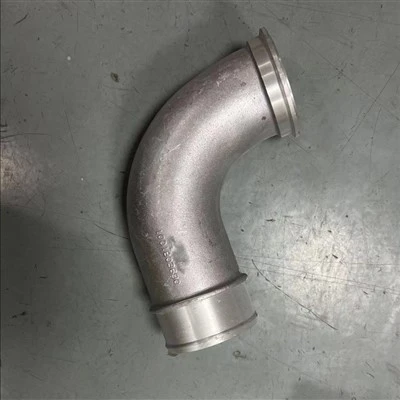
  • Compressor Outlet Pipe

    Compressor Outlet Pipe

    1001803690 Compressor outlet pipe. Aluminum tube.

    Add to Inquiry
  • Crankshaft Rear Oil Seal

    Crankshaft Rear Oil Seal

    Engine model: WP12Name: Crankshaft rear oil sealProduct size: 115*140*13Product model: 1001994648

    Add to Inquiry
First 123 Last 1/3
 
Understanding the Function of Engine Valves
 
01/

Introducing Engine Valves
Engine valves are essential components that control the flow of air and fuel mixture into the combustion chamber and allow the exhaust gases to exit. They consist of two main types: intake valves and exhaust valves. The intake valves facilitate the entry of the air-fuel mixture, while the exhaust valves enable the expulsion of exhaust gases.

02/

Valve Mechanism and Operation
Valve operation is achieved through a camshaft, which is synchronized with the rotation of the engine's crankshaft. The camshaft is equipped with lobes that exert force on the valves through a series of intermediary components such as lifters, pushrods, and rocker arms. As the camshaft rotates, the lobes push the valves open and close according to the engine's timing requirements.

03/

Intake Stroke
During the intake stroke, the piston moves downward, creating a vacuum within the cylinder. The intake valve opens, allowing the air-fuel mixture to enter the combustion chamber from the intake manifold. This mixture is essential for the combustion process and contributes to the engine's power output.

04/

Compression and Power Strokes
Once the intake stroke is complete, the intake valve closes. The piston then moves upward during the compression stroke, compressing the air-fuel mixture within the cylinder. At the top of the compression stroke, the spark plug ignites the compressed mixture, initiating the power stroke. The expanding gases from combustion force the piston downward, generating power to propel the vehicle.

05/

Exhaust Stroke
After the power stroke, the exhaust valve opens, allowing the burned gases to exit the cylinder and flow into the exhaust manifold. These gases are then expelled from the engine through the exhaust system. The exhaust valve closes before the piston begins its upward movement in preparation for the next intake stroke.

06/

Valve Timing and Overlapping
Valve timing is crucial for efficient engine performance. It determines the duration and timing of the valve opening and closing events, ensuring optimal fuel-air mixture intake and exhaust gas expulsion. In some engines, there is a brief period called valve overlap, where both the intake and exhaust valves are slightly open simultaneously. This overlap aids in scavenging the remaining exhaust gases and enhancing engine efficiency.


Working Principle and Function of Piston Cooling Nozzle


Piston cooling nozzles are an important part of modern internal combustion engines, especially in high-performance and heavy-duty engines. Pistons suffer extremely high temperatures and pressures during operation and must be effectively cooled to ensure stable engine operation and long service life. Piston cooling nozzles are a key component in achieving this goal.


Structure of Piston Cooling Nozzle
Usually consists of a nozzle body, nozzle hole and seals. The nozzle body is the part that is mounted on the engine block or head, and the nozzle hole is the passage that directs the coolant to the back of the piston. The seals ensure that the coolant will not leak during transmission.


Working Principle of Piston Cooling Nozzle
The working principle of the piston cooling nozzle is mainly based on fluid dynamics and thermodynamics.
When the engine is running, coolant (usually a mixture of water and glycol) is pumped into the cooling system. The piston cooling nozzle directs the coolant to the back of the piston by precisely controlling its flow and direction.

The coolant is ejected through the nozzle holes at a rate and pressure that creates a thin film covering the back of the piston. This film absorbs and carries away a large amount of heat generated by the piston, lowering the piston temperature. At the same time, the coolant also plays a lubricating role, reducing the friction between the piston and the cylinder liner.
The design of the piston cooling nozzle needs to consider the coolant flow, spray angle, spray pressure and other factors. Reasonable nozzle design can ensure that the coolant evenly covers the back of the piston to avoid localized overheating.


Role of Piston Cooling Nozzle
Piston cooling nozzle plays a vital role in internal combustion engines.
First, it can effectively reduce the temperature of the piston and prevent the piston from deforming, melting or cracking due to high temperature.
Second, the lubricating effect of coolant on the piston can reduce friction loss and improve engine efficiency.
At last, the piston cooling nozzle helps to maintain the thermal balance of the internal parts of the engine to ensure the stable operation of the engine.


Summary
As a key component in the internal combustion engine, the piston cooling nozzle realizes effective cooling of the piston by precisely controlling the flow and direction of the coolant. Its working principle is based on fluid dynamics and thermodynamics. By forming a thin film of coolant covering the back of the piston, it reduces the temperature of the piston and minimizes friction losses. The design and application of piston cooling nozzles are of great significance for improving engine performance, extending service life and maintaining stable operation.

The Role of The Engine Rocker Arm for a Better Performance of The Vehicle
 

It is true that many drivers go for years without knowing the details of key components for the operation of their vehicle, such as valves, piston rings and tappets, for example. Occasionally, even those who work in workshops can come across a component whose function is not clear and/ or difficult to remember. This is the case of the engine rocker arm.


The rocker arm is the part responsible for transmitting the movement of the camshaft towards the intake and exhaust valves of the engine, a process that occurs through the direct contact of these parts with the tappets and according to the movement of the shaft.


While the rocker arms have direct contact with the tappet at one of its ends, the other end of this component is coupled to the intake and exhaust valves. This means that, when triggered by the camshaft cam, the rocker arm lowers one of its sides, allowing the valve to be opened in order to let the mix of air and fuel to enter the combustion chamber.


This movement occurs for both intake and exhaust valves. The displacement, in turn, is supported by a spring that forces the valves back to their initial position. The springs must be resistant enough to withstand high engine rotations, considering that the process occurs at extreme speeds and maintaining constant contact with the rocker arms.


Just like most vehicle components, rocker arms are also developed from materials and specifications recommended by worldwide engineering standards, usually with high-quality alloy steels, which help to ensure optimized strength and longer life span to the engine.

阀摇臂


阀摇臂组件

Flat x roller rocker arm: know the variations
We have already seen that the engine rocker arm is a component of the mechanical distribution system on the valve assembly and makes itself present in most internal combustion engines. But did you know that there are currently two different types of rocker arms on the market? In addition to the flat traditional ones, the roller rocker arms are also conquering consumers' preference.


The new roller technology applied to some engines ensures synchronous transmission between camshaft, hydraulic tappets and valves using the rolling effect (rollers) between the rocker arms and the cam. The result is the loss of friction and consequent overall efficiency that directly impacts performance.


All that thanks to the application of an advanced technology in the micro fusion process with special alloy and to the rigorously controlled heat treatments that the roller rocker arm receives, resulting in a special tempered and ground steel.


We obviously can't forget that the lubrication efficiency is one of the most important points to ensure the good performance and durability of the rocker arm components. For this reason, it is also recommended to always check for any obstruction in the lubrication hole located on this part!

What Are the Parts of The Rocker Arm in an Engine?
 

The proper functioning of the rocker arm's parts is essential for maintaining engine performance and efficiency. So, the parts are

Rocker Arm Body

The main structural component of the rocker arm, often shaped like an "L" or "U," connects to the engine's valve and receives motion from the camshaft. This body helps to open and close the engine valves.

Rocker Arm Shaft

The shaft on which the rocker arm pivots. It is mounted within the engine's cylinder head and allows the rocker arm to move as the camshaft lobes act upon it. These shaft needs to be lubricated well to function and operate. The rocker arm shaft is responsible for better operation of the rockers.

Rocker Arm Adjuster

Some rocker arms have an adjuster mechanism, such as a set screw or nut, to enable precise control of valve clearance. This is important for maintaining proper valve timing and performance. When the engine temperature rises the tip of the rocker arm increases, then this component is used to control the gaps.

Pushrod

These pushrods are connected to the engine camshaft in the engine block. These pushrods push the engine rocker arms to operate to open and close the valves. The push rods of the engine are responsible for operating the rocker arm at the perfect time.

Tappet

The tappet is the front part of the rocker arm. This tappet makes the connection to the valve tip that pushes the body of the valve. The gap between the tappet and the valve tip is called tappet clearance. This tappet gap needs to operate carefully to function the engine operations.

Valves

Engine valves are the last leading component of these rocker arms. These valves are important to make the combustion in the engine in a sequence. So, opening and closing of these valves at the correct time is more important and this s happens with the help of the rocker arm.

How to Remove Exhaust Flange Bolts Easily?


Although not in our supply chain, we have had a few questions regarding other types of flange bolting and installation. Here is a basic guide to exhaust flange assembly.

Exhaust flanges consist of a pair of metal sections that join your exhaust pipe together. They are helpful in conjunction with an exhaust set of bolts and gaskets. The usual options of exhaust flanges are the 3 bolt or 2 bolt types. Usually, m10 with the 2 bolt option is helpful, and an m8 bolt for the 3 bolt. The recommended grade of bolts is 8.8 tensile or higher so that you can tighten them without stretching or breaking the bolts. There is also the use of locking nuts, Loctite, or spring washers. It helps to prevent the nuts from vibrating loose.

Exhaust flanges work with the use of a set of bolts and gaskets to join them together. When you set up a wastegate pipe or exhaust for ease of fitment, you must use v bands or exhaust flanges to enable the sections to re-fit or pull off for access. You can also use exhaust flanges without gaskets, and for that, you need to use automotive-grade silicon.


Welding Exhaust Flanges
Welding exhaust flanges are almost the same thing as welding v band flanges. The essential factor to start with is tack welds every 20-30mm. It helps prevent distortion stitch weld the flange and let it cool down between welding.


How to Remove the Exhaust Flange Bolts
The changing temperatures from cold to hot of the exhaust system together without changing the moisture conditions can result in speeding up the rusting of the flange bolts. If the rust progresses, it could reach the threads, and these may go useless. It is essential to replace and release the flange bolts. You need to apply heat to remove the rust from the threads. If the threads are unusable, you need to cut the bolts from the flange.


Here are a few easy steps to remove the exhaust flange bolts easily:
Keep a check if the area on the flange bolts has no fuel lines as well as combustibles. Clearance of all the combustibles underneath the vicinity for safety is essential.
Use gloves and goggles to protect your hands and eyes.
It is better to have a fire extinguisher closer in case the fire starts.
Ignite the torch carefully. Make sure that the bright blue flame is half or one inch long.
The tip of the torch must be 6-8 inches away from the flange bolt until it has a dull orange color. You need to turn off your torch. Heat the bolt slowly and do not use air to trigger it.

It is better to let the flange bolt cool down and place the socket that fits the bolt to the ratchet.
Slide the socket to the nut that is at the flange bolt. If the bolt loosens, continue with the same process for the rest of the bolts. If it doesn't budge, go to the next step.
Keep the tip 3-4 inches further and set the flames again.
Heat the bolt once again and when it turns to a bright orange glow, use the air to trigger and blow out more oxygen. Bolt would then start to meltdown.

Turn your torch off and quickly hammer the threaded side of the flange bolt. Repeat the process until the bolt is out of the exhaust.
Let the hot bolt cool down for around thirty minutes. Make sure no combustible materials are lying around before you leave the area.
Throw the cut bolts after another hour or two to ensure that the bolts are at room temperature and won't cause fires in the garbage bin.


Our Factory

Jinan Aidela International Trade Co., Ltd. Has been deeply involved in the industry for 13 years. Reputation and reputation are also well-known in the industry. We are engaged in heavy-duty truck parts, and we have professional business and technical personnel to provide you with services and provide you with a one-stop solution to your domestic procurement chain.Our factory produces all high-end products. We firmly believe that quality is the soul of an enterprise.

productcate-1-1
 
FAQ
 

Q: How do jet engines get cooled?

A: Most airplanes feature air-cooled engines. In other words, they leverage the air traveling over the airplane's frame to cool their engines. Air-cooled engines are designed with cooling fins. They are small and thin pieces of metal that protrude from the engine heads and barrels.

Q: What is the valve in a piston engine?

A: There are two main types of valves - the intake and the exhaust. Intake valves are responsible for allowing the mixture of air and fuel to enter the engine's combustion chambers. When the engine's piston moves down on its intake stroke, a vacuum is created within the cylinder.

Q: What part of a car cools the pistons?

A: Cooling channels—The piston is cooled by oil flowing through a cooling channel or gallery incorporated into the piston. One or more oil spray nozzles feed oil into the cooling channel through inlet openings in the bottom of the piston. The cooling oil exits the cooling channel through one or more drain holes.

Q: What is the purpose of a piston cooling jet?

A: Piston Cooling Jets (PCJs) are used in traditional Internal Combustion (IC) engines to remove the excess heat from the piston, allowing for higher thermal loads to be reached. PreonLab 5.0 allows for investigations of the dynamic and thermal interactions between the lubricating oil jet and the moving piston.

Q: What are the advantages of using water for piston cooling?

A: Advantages: Less tendency for detonation, better lubrication of pistons due to them being cooler.

Q: Where are the piston cooling jets located?

A: The pistons are cooled by oil jets fired at the underside from the crankcase. Any excessive piston temperature rise may lead to engine seizure because of piston warping.

Q: What bolts to use for exhaust pipe?

A: The usual options of exhaust flanges are the 3 bolt or 2 bolt types. Usually, m10 with the 2 bolt option is helpful, and an m8 bolt for the 3 bolt. The recommended grade of bolts is 8.8 tensile or higher so that you can tighten them without stretching or breaking the bolts.

Q: What is the exhaust pipe in the exhaust system?

A: The entire system conveys burnt gases from the engine and includes one or more exhaust pipes. Depending on the overall system design, the exhaust gas may flow through one or more of the following: Cylinder head and exhaust manifold. A turbocharger to increase engine power.

Q: What does the exhaust pipe connect to?

A: Exhaust Manifold: The exhaust manifold is a pipe that connects the engine's exhaust ports to the rest of the exhaust system. It collects the exhaust gases from each cylinder and directs them to a single pipe. Catalytic Converter: The catalytic converter is an essential exhaust system component.

Q: What is a valve job on an engine?

A: A valve job is simply a re-cutting or "re-facing" of the valve seats, and sometimes the valves. Valve jobs are necessary when the seats are worn to the point that there is no longer a proper seal between the seat and the valve. By re-facing the seats and/or valves, the proper seal is re-established.

Q: How many valves does my engine have?

A: A car engine will have two to four valves per cylinder. A bank of cylinders could be two to six, but some designs have had smaller heads that don't cover every cylinder in the bank of cylinders.

Q: How do you check engine valves?

A: Using the air hose, insert it into the 9⁄16-inch hole wooden block and release compressed air into the cylinder port. Using the compressed air/water method, you will actually be able to see bubbles forming past a bent valve on the intake or exhaust side—the larger the leak, the bigger the bubbles.

We're well-known as one of the leading engine valve parts manufacturers and suppliers in China. If you're going to wholesale high quality engine valve parts with competitive price, welcome to get more information from our factory. Also, customized service is available.

Engine Cylinder Head Parts, Cylinder Head Gasket 612600040355, Truck Engine Exhaust Valve
goTop

(0/10)

clearall