Jinan Aidela International Trade Co., Ltd.

Engine Moving Parts

What is Engine Moving Parts?


Engine moving parts refer to any component within an engine that is not stationary and actively participates in the process of converting fuel into mechanical energy. These parts move in response to forces exerted by the engine's internal combustion process or external controls.


Why Choose Us


Professional Team
We are engaged in heavy-duty truck parts, and we have professional business and technical personnel to provide you with services and provide you with a one-stop solution to your domestic procurement chain.


Our Product
Heavy-duty truck cab, engine, gearbox, chassis, frame, oil, etc.


Reliable Supply
We offer a vertically integrated supply chain model to ensure reliable long-term supply and complete traceability.


Shipping Service
We have established a robust shipping service offered to ensure timely and secure delivery of orders worldwide.

  • Radiator Core

    Radiator Core

    Heavy Truck Accessories Radiator Cores AKA Cooler Cores. The applicable engine models are: WD615

    Add to Inquiry
  • Oil Cooler Assembly

    Oil Cooler Assembly

    611600070166 oil cooler assembly, suitable for heavy truck WP10H engine.

    Add to Inquiry
  • Clutch Pressure Plate

    Clutch Pressure Plate

    If the clutch pressure plate is broken, the clutch plate will slip and the car will suffer from

    Add to Inquiry
  • Exhaust Pipe Sealing Ring

    Exhaust Pipe Sealing Ring

    Exhaust pipe sealing rings include: Weichai WD615 WD618 WP10.WP10.5 WP12 WP13, Xichai, Man MC10 MC11

    Add to Inquiry
  • Fuel Water Cold Treasure

    Fuel Water Cold Treasure

    The total composition of fuel water is built-in and external. We have very professional business

    Add to Inquiry
  • Thermostat Core

    Thermostat Core

    HeavAdapt to different heavy truck engine needs.y truck thermostats are: 60°. 71° 75° 77° 79° 80°

    Add to Inquiry
  • Compressor Intake Pipe

    Compressor Intake Pipe

    The inlet duct can be divided into subsonic, supersonic and hypersonic inlet ducts according to the

    Add to Inquiry
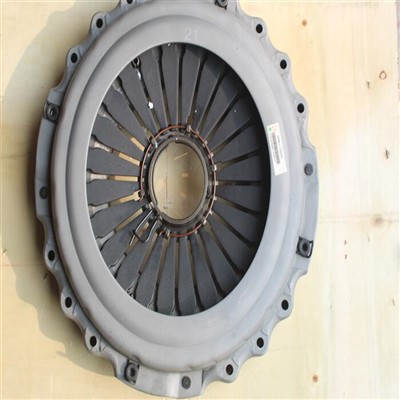
  • Clutch Pressure Plate

    Clutch Pressure Plate

    Heavy truck clutch pressure plates are divided into original, matching and auxiliary factories.

    Add to Inquiry
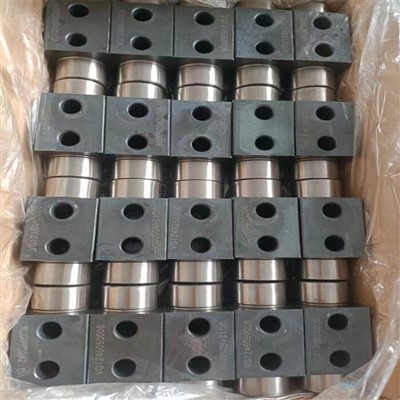
  • D12 Engine Rocker Shaft Assembly

    D12 Engine Rocker Shaft Assembly

    VG1246050006 rocker shaft assembly D12 engine

    Add to Inquiry
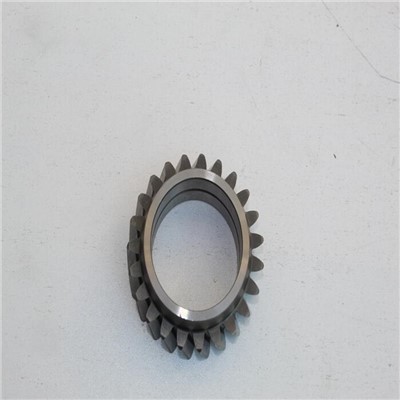
  • WD618 engine oil pump gear

    WD618 engine oil pump gear

    The 61800070024 oil pump gear is an essential part of heavy-duty trucks that is compatible with

    Add to Inquiry
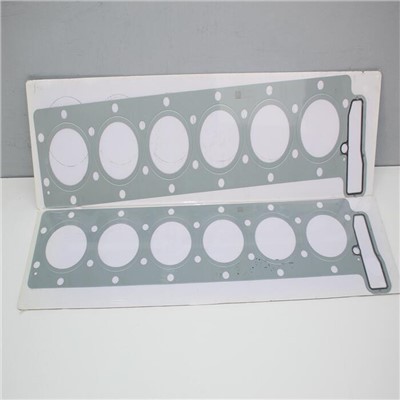
  • Cylinder Bed Gasket MC11

    Cylinder Bed Gasket MC11

    The cylinder gasket components on the engine work under the severe conditions of high temperature,

    Add to Inquiry
  • Engine Camshaft Parts

    Engine Camshaft Parts

    The camshaft is a component in a piston engine. Its function is to control the opening and closing

    Add to Inquiry
First 12 Last 1/2
The Components of an Engine


There are several moving parts to an engine, some of which are referred to as a group and others of which are noted as individual components:


The engine block. The engine block is the area where all of the different parts of the engine are housed. It includes all of the cylinders and their internal components, as well as connective systems and ductwork.


Combustion chamber. The combustion chamber is an individual construct within the engine where pistons, cylinders, and cylinder heads are housed; it's the actions here that drive the rest of the vehicle forward.


Cylinders and cylinder heads. Cylinder heads rest over the overall cylinder and contain intake and outtake valves, spark plugs, and fuel injectors that are needed to combust fuel within the chamber.


Pistons. Pistons are cylindrical components within actual cylinders that move up and down when the engine is running. The momentum of pistons is the first link in the chain of motion throughout a car's engine. They connect to the crankshaft with a connecting rod.


Crankshaft. The crankshaft is a special mechanism that converts the up-and-down movement of pistons to a rotational movement that the car can use to move. The crankshaft is a delicate piece, protected by a special housing area. It's also dependent on oil to remain in healthy operating capacity.


Fuel injectors. Fuel injectors are located inside of the cylinders to deliver the fuel needed to combust in the engine. There are a handful of injector types; direct injection delivers fuel into each cylinder individually, while ported injection sprays fuel outside of the valve to mix with air before either component enters.


Spark plugs. Spark plugs are mechanisms that deliver a spark to the combustion area to ignite the fuel and air.

How Does A Car Radiator Work?


Radiator is a heat exchange that cools fluid, which cools down the engine. The radiator is located under the hood and in front of the engine. The coolant reservoir is located next to these components as well.

The engine burns fuel and creates energy, which generates heat. For that reason, it gets very hot while running, so the temperature must be regulated to prevent overheating. Venting this heat away from engine parts is important to prevent damage.

Car radiators work to eliminate heat from the engine. The process begins when the thermostat in the front of the engine detects excess heat. Then, coolant and water get released from the radiator and sent through the engine to absorb this heat.

Once the liquid picks up excess heat, it is sent back to the radiator, where air blows across it to cool it down.

The radiator utilizes thin metal fins during the process, which are effective at allowing heat to quickly escape to the air outside the car. These fins are often working alongside the fan that's blowing air across the radiator.


Picking Your Radiator Core: 2 Row, 3 Row, or 4 Row?


1. Does your car need increased cooling capacity?

Are you looking to replace a radiator but unsure what cooling your car needs? Well look no further because we have created an extensive guide for picking the ideal radiator choice for you!
We know choosing a radiator replacement can be tricky, especially if it's your first time replacing a cooling system part. You might encounter terms like 2, 3 or 4 row radiator cores. How does all this work and how do you choose which core configuration is best for your car?
That's what we're here for and today, we're going to focus on the optimal amount of rows in a radiator core for your car's cooling requirements.

2. Picking a core, 2, 3 or 4 row?

The core is the part of the radiator between the tanks. It is made up of tubes that carry the coolant and fins that transfer heat from the tubes to the air passing through the core. Rows are number of lines of tubes from one face of the core to the other (front to back). 3 lines of tubes are found in a 3 row radiator. More rows mean more tubes which means more cooling.

3. So how do you know which core is best for you?

Well things get a lot more simple when you account for the following things:
Engine power (horsepower)
Vehicle usage
Climate
Fitment
Depending on how much horsepower your engine can generate, it will produce a respective amount of heat. This needs to be cooled in order to prevent overheating and to allow your car to perform at it's best. It's possible to cool the engine too much so it does not reach optimum operating temperature – resulting in decreased fuel efficiency and exhaust emissions.

If you use your vehicle for city driving versus frequent on-track racing or track meets, your cooling needs are going to be drastically different. Racing requires high cooling capacity and minimal weight – so you're going to need an efficient radiator. Whereas a city or passenger car is likely to fit a stock standard replacement or similar.

Climate also plays a big part. Australia is a generally hot place during the summer, but certain states like Queensland or Northern Territory deal with humidity or heat a lot more than the rest. It can be difficult for a vehicle to dissipate excess heat in these conditions – this is where you might benefit from a larger radiator with more rows.

Summary: As a general guide, 3+ radiator rows stands to benefit a high performance or heavy duty vehicle. 1-2 is usually stock standard but can be highly efficient for more strenuous uses depending on other core specs.

4. Core specs to account for

Whether you select a 2, 3, or 4 row radiator it's important to consider other core specs. Sometimes high performance cooling can still be achieved by adapting these factors, especially for vehicles that cannot fit a thicker radiator with more rows.

Tube size and surface are important as this is what the coolant is going to flow through. The more surface contact, the more heat dissipation. For instance, a wider tube or dimpled tube surface increases contact surface area leading to more efficient cooling. Cooling performance can also be increased by fitting more tubes within the same core size.

Fins are placed between the tubes to increase contact surface area where they are doing the bulk of heat dissipation work. Increased contact between the tube and fin improves heat transfer to more efficiently remove heat from coolant passing through the tubes. Heat dissipation can be adjusted with changes to FPI (number of fins per inch) and also fin type.

Cores are made up of fins and tubes. A 1 row core is a common configuration for an everyday modern road car. Some other factors that can increase cooling include FPI, fin type, core and header material as well as tube pitch (distance between tubes), size and surface.

5. Materials

Copper brass radiators are generally found in older cars. During the 70's the car industry began moving towards aluminium radiators. Copper brass is heavier but works well in endurance environments such as trucks and on-highway applications. It is also easier to repair as it can be disassembled.

Aluminium is the most popular option and most new road cars will be fitted with an aluminium radiator with plastic tanks. They often last the life time of the vehicle but certain environmental factors or crash damage can effect this. They are efficient and light but generally need to be replaced when damaged as the cores cannot be repaired.

Performance alloy often comes custom made for specific applications. They are light, highly efficient and are frequently designed to fit restrictive engine bay fitment requirements, which means they may not be typical radiator dimensions. Fitment is important as a vehicle may not have clearance available for a thicker radiator core.

Which Vehicles Need Oil Coolers?

While any vehicle can have an oil cooler, vehicles frequently involved in heavy-duty or high-performance situations usually require one. Coolers are most often in semi-trucks, heavy-duty pickup trucks that haul trailers, and sports vehicles. However, if you tow a great deal with your regular passenger car, then you would also benefit from an oil cooler.

Oil coolers extend the life of your vehicle's engine and reduce the chance of overheating under extreme conditions. For example, if you haul a trailer uphill for long distances, then chances are that your engine works at maximum capacity for a long time. This creates a lot of heat that needs a way to dissipate. If the heat cannot be released, then it builds up and raises the engine's temperature. An oil cooler provides an extra surface for that heat to dissipate.


Do Oil Coolers Need Special Attention?
If installed correctly, your engine oil cooler should not need much maintenance. Like radiators, make sure to keep your cooler clean of debris, and check for leaks. On top of that, make sure you keep your engine oil in good condition. Change your oil at the recommended intervals. This helps to reduce the chance that your cooler will plug internally.

发动机凸轮轴零件
Tips For Installing the Engine Oil Cooler Assembly

Here are some helpful tips for when you install an engine oil cooler in your car


Prep the Work Area and Parts
Before you pop open the hood, check your work area for sharp edges and make sure not to expose the oil hoses to them. Similarly, keep track of metal surfaces that can get hot while the engine runs. The cooler connects to the engine by way of hoses made of flexible material. These oil cooler lines can get damaged if they rub against the edges or melt in the heat released by hot surfaces.


Get Longer Oil Cooler Lines
When the oil cooler comes with hose and barbed fittings so you can tailor the length of the hose, get hoses that are somewhat longer than the required measurements. The extra length gives you leeway in case of an unexpected development. For example, if the engine oil cooler doesn't fit in the location, you must move the heat exchanger to a different location. If the oil cooler lines prove too short and cannot reach the new location, you must get longer replacements.
You can cut off the excess length once you finish connecting the engine oil cooler and engine with the lines.


Use Fittings With Pipe Threads
A threaded pipe has one end with screw threads similar to the grooves on a screw. Pipe threads can screw into a fitting or another threaded pipe with compatible threads. Fittings with pipe threads form sturdy mechanical joints and create seals that prevent leaks.

Apply sufficient force when you tighten the engine oil cooler fittings. Insufficiently tight fittings can lead to issues like oil leaks and outright disconnection. Conversely, excessive tightening can damage the pipe thread, causing problems like the fittings getting stuck together and debris flowing through the engine oil cooler.


Where Should You Put the Engine Oil Cooler?
The engine oil cooler relies on airflow to carry away the heat radiating from its metal surface. Always install it in a place that constantly receives strong airflow.

Additionally, keep the cooler near the vehicle's front as close to the engine's cooling fan as possible. Even when your car doesn't move, its cooling fan will provide enough airflow to cool the engine oil cooler.

Avoid installing the engine oil cooler behind parts that disrupt airflow or radiate heat. Examples include the A/C condenser and transmission cooler. These parts might block airflow and also generate heat that raises the temperature of the air that reaches the cooler.

Believe it or not, the driver's wheel well is also a viable location for the engine oil cooler, as long as you can provide airflow. This is for vehicles that lack sufficient space in their engine bay to accommodate the cooler.

However, if you do install the cooler in the wheel well, you must protect it from road debris. The tire often flings small objects into its wheel well with enough force to potentially puncture the cooler. You can prevent this problem by adding a sturdy body panel to stop debris strikes.

Some engine oil coolers include electric fans that blow air over them. They rely less on external airflow than ram-air-type coolers. However, fan-equipped engine oil coolers can still take advantage of a location with naturally good airflow to improve their ability to remove heat.

重型卡车发动机气缸床垫片MC11发动机201V03901-0403


Features of Car Exhaust Gasket?

The important features of the exhaust gasket are:
It is made from high-temperature materials.
It is made up of a combination of metal and graphite to increase sealing efficiencies.
A gasket is a mechanical seal that helps to fill the space between two surfaces. It helps to prevent leakage or seepage, both into and out of the joint between the two surfaces. For instance, where both solid metal surfaces meet like a joint in a pipe. If the seal is not perfect, it can create a gap which can cause the liquid or gas to enter or escape from the joint. A gasket helps to fill this gap.

What Are the Types of Car Exhaust Gasket?
 

There are three main types of gaskets present in this system:
Exhaust Manifold Gasket
Exhaust Flange Gasket
Header Gasket

Exhaust Manifold Gasket

The exhaust manifold gasket is found between the engine head and the exhaust manifold.
This gasket is produced in such a way to withstand the extreme pressures from the cylinders and high temperatures from the gases which travel through it.
This type of gasket is made of metal, typically steel, on the manifold side and the engine head side is made of a fibre material so that the manifold has a moving room against the metal part of the gasket.

Exhaust Flange Gasket

Donuts gasket, which is also the other name for the exhaust flange gasket is found between the catalytic converter and the header pipe.
Exhaust flange gasket helps to improve the flow of the gases through the vehicle's exhaust system and is equivalent to the manifold gasket, which means it is also typically made of steel and can withstand high temperatures.
The joints of this gasket are made from materials such as rubber, graphite or ceramic fibre.

Header Gasket

Header gaskets are found between the cylinders of individual exhaust pipes, manifolds, and the collector pipe; these gaskets help in sealing the gaps so the exhaust gases can flow through those areas with no leakage and will eventually exit through the tailpipe.
Header gaskets are made of high-fibre materials along with a steel filler to withstand the heat and pressure-resistance.
The purpose of these joints is to get the gases from the engine through the vehicle's exhaust system into the atmosphere and fits the specific needs of each part


Our Factory

Jinan Aidela International Trade Co., Ltd. Has been deeply involved in the industry for 13 years. Reputation and reputation are also well-known in the industry. We are engaged in heavy-duty truck parts, and we have professional business and technical personnel to provide you with services and provide you with a one-stop solution to your domestic procurement chain.Our factory produces all high-end products. We firmly believe that quality is the soul of an enterprise.

productcate-1-1
 
FAQ
 

Q: What is the movable part of engine?

A: List of moving parts in Four-Stroke engine: Piston , piston wrist pin , oil rings and compression rings. Connecting Rod. Crankshaft (crankshaft bearing).

Q: What is important for the moving parts of your engine?

A: Lubrication: Engine oil acts as a lubricant for the moving parts in the engine, reducing friction and preventing wear and tear. Over time, oil loses its viscosity and ability to lubricate, leading to increased friction and wear on engine components.

Q: What is extremely important for the moving parts of your engine?

A: Oil is essential to the continued performance of an engine and extremely important because of its ability to protect your engine. Engine oil lubricates the moving parts in your engine to keep them from overheating.

Q: What is a radiator core made of?

A: For many years radiators were made from brass or copper cores soldered to brass headers. Modern radiators have aluminum cores, and often save money and weight by using plastic headers with gaskets.

Q: What is the purpose of the radiator in a car?

A: A radiator is the key component of the engine's cooling system. Its main role is to disperse a mix of antifreeze and water throughout its fins, which releases some of the engine's heat while taking in cool air before continuing to pass the rest of the engine.

Q: Can a radiator core be replaced?

A: You can recore most radiators unless they have significant damage to the entire radiator. In those situations, recoring may not be practical. Replacement may be a better option for those situations if you have a newer car that you plan to keep long-term.

Q: What is a core on a radiator?

A: The core is the part of the radiator between the tanks. It is made up of tubes that carry the coolant and fins that transfer heat from the tubes to the air passing through the core. Rows are number of lines of tubes from one face of the core to the other (front to back). 3 lines of tubes are found in a 3 row radiator.

Q: How do you unclog a radiator core?

A: To unclog the radiator, start by removing the drain cap and draining out the old coolant. Flush out the radiator with water, then refill the radiator with fresh coolant fluid, and your radiator will be good to go for another few years!

Q: How does an oil cooler work?

A: Oil cooling is the use of engine oil as a coolant, typically to remove surplus heat from an internal combustion engine. The hot engine transfers heat to the oil which then usually passes through a heat-exchanger, typically a type of radiator known as an oil cooler.

Q: Are engine oil coolers necessary?

A: Coolant in the oil is especially bad because it lessens the oil's lubrication ability. Oil coolers are very beneficial for certain types of trucks and performance vehicles. If you put your vehicle under a lot of load or run your car's engine at top speed for long periods, then you could benefit from an oil cooler.

Q: How do you seal an exhaust pipe?

A: Small cracks or pinholes can be sealed using just epoxy or exhaust tape, but larger holes will need a patch. If the leak is a thin crack or small hole, you can proceed without purchasing or making a patch to help. If the hole is larger, you will need a patch as well as epoxy.

Q: What does exhaust seal do?

A: The exhaust pipe gasket is a gasket set between the exhaust pipe and the exhaust manifold, whose main function is to prevent leakage between the two. This can enhance the power and fuel efficiency of the vehicle, reduce noise, and reduce exhaust pollution.

Q: What happens when the O-ring goes bad?

A: O-Ring Failure Description: The seal exhibits blisters, pits or pocks on its surface. Absorption of gas at high pressure and the subsequent rapid decrease in pressure. The absorbed gas blisters and ruptures the elastomer surface as the pressure is rapidly removed. Contributing Factors: Rapid pressure changes.

Q: Is an oil cooler a radiator?

A: An oil cooler is a type of radiator that uses oil as a coolant. As the oil cools the object in question, it absorbs the heat. It then gets passed through a cooler, and back to the hot object. This is a continuous cycle, offering a steady cooling rate to your item.


We're well-known as one of the leading engine moving parts manufacturers and suppliers in China. If you're going to wholesale high quality engine moving parts with competitive price, welcome to get more information from our factory. Also, customized service is available.

WD618 Engine Pistons, Wd615 Engine Crankshaft, Air Compressor Cylinder Valve Plate
goTop

(0/10)

clearall