


Brake Assembly
Fault classification of brake assembly: 1. Fault phenomenon: When the brake pedal is pressed, the pedal does not rise and there is no resistance; Determine the cause: Check whether the brake fluid is missing; whether there is oil leakage at the brake wheel cylinder, pipelines and joints; whether the parts of the master cylinder and wheel cylinder are damaged; 2. Fault phenomenon: When the brake pedal is depressed to the bottom, the braking effect is not good; continuous braking does not improve the effect, and the pedal gradually increases; Determine the cause: There is gas mixed in the braking system; 3. Fault phenomenon: Continuously apply the brakes, the pedal returns to a higher position, and the braking effect is improved; Judgment reason: The gap between the friction plate and the brake drum is too large; 4. Fault phenomenon: Continuously apply the brakes, the pedal position rises, and there is a sinking feeling; Determine the cause: oil leakage; 5. Fault phenomenon: The pedal position is very low; when you step on it again, the position cannot be raised and it feels stiff; Determine the cause: The master pump is clogged; 6. Fault phenomenon: The pedal height is normal, neither soft nor sinking, but the braking effect is not good; Judgment reason: The gap between the friction plate and the brake drum is too large or there is oil; 7. Fault phenomenon: braking deviation; Determine the cause: If the car leans to the left, the right wheel brake is not working, and vice versa; 8. Fault phenomenon: The brake drum (disk) heats up after the car has been driven for a certain mileage; Determine the cause: Check the brake master cylinder, brake cylinder or pipeline; 9. Fault phenomenon: The free travel of the brake pedal is too small; Judgment reason: needs adjustment; 10. Fault phenomenon: The brake fluid level rises slowly; Determine the cause: Loosen the bleeder screw and observe the return of the brake shoe. If the brake shoe returns, the oil pipe should be unclogged; if the brake shoe does not return, the brake cylinder should be disassembled and inspected.
The heavy-duty truck braking system consists of several components that work together to ensure safe and reliable stopping power. These components include brake pads, brake drums, brake calipers, brake shoes, hydraulic brake lines, and brake fluid.
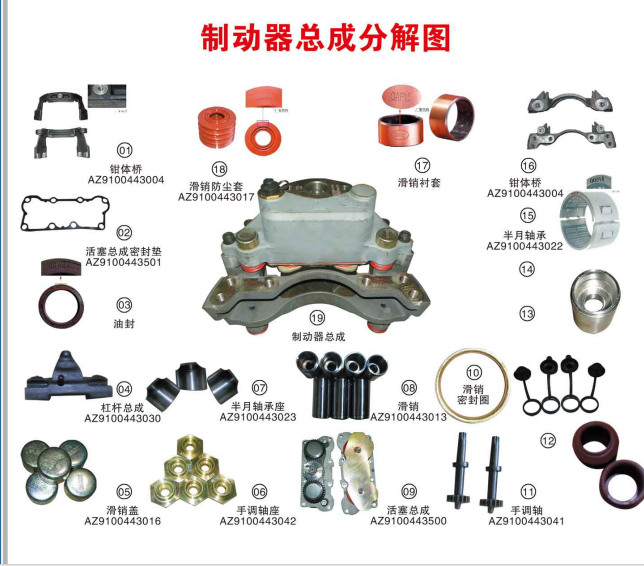
The brake pads are the components that come into contact with the brake drum, creating friction and slowing the vehicle down. The brake drums are circular metal objects that spin with the wheels and are connected to the axles. When the brake pads squeeze against the drum, the friction created stops the wheel from turning.
The brake calipers are the components that hold the brake pads in place and provide the force necessary for stopping the vehicle. The calipers are connected to the hydraulic brake lines, which transmit the force from the brake pedal to the brake assembly.
The brake shoes are a similar component to brake pads, but they are used in some heavy-duty trucks instead of brake pads. They create friction with the braking drum in the same manner, but are a less sophisticated design compared to brake pads.
Finally, brake fluid is a key component of the braking system as it provides the hydraulic pressure required to activate the braking components and bring the vehicle to a stop.
Overall, the heavy-duty truck braking system is a complex and highly engineered assembly that ensures safe and reliable stopping power for these large vehicles on the road.
Fault classification of brake assembly:
1. Fault phenomenon: When the brake pedal is pressed, the pedal does not rise and there is no resistance;
Determine the cause: Check whether the brake fluid is missing; whether there is oil leakage at the brake wheel cylinder, pipelines and joints; whether the parts of the master cylinder and wheel cylinder are damaged;
2. Fault phenomenon: When the brake pedal is depressed to the bottom, the braking effect is not good; continuous braking does not improve the effect, and the pedal gradually increases;
Determine the cause: There is gas mixed in the braking system;
3. Fault phenomenon: Continuously apply the brakes, the pedal returns to a higher position, and the braking effect is improved;
Judgment reason: The gap between the friction plate and the brake drum is too large;
4. Fault phenomenon: Continuously apply the brakes, the pedal position rises, and there is a sinking feeling;
Determine the cause: oil leakage;
5. Fault phenomenon: The pedal position is very low; when you step on it again, the position cannot be raised and it feels stiff;
Determine the cause: The master pump is clogged;
6. Fault phenomenon: The pedal height is normal, neither soft nor sinking, but the braking effect is not good;
Judgment reason: The gap between the friction plate and the brake drum is too large or there is oil;
7. Fault phenomenon: braking deviation;
Determine the cause: If the car leans to the left, the right wheel brake is not working, and vice versa;
8. Fault phenomenon: The brake drum (disk) heats up after the car has been driven for a certain mileage;
Determine the cause: Check the brake master cylinder, brake cylinder or pipeline;
9. Fault phenomenon: The free travel of the brake pedal is too small;
Judgment reason: needs adjustment;
10. Fault phenomenon: The brake fluid level rises slowly;
Determine the cause: Loosen the bleeder screw and observe the return of the brake shoe. If the brake shoe returns, the oil pipe should be unclogged; if the brake shoe does not return, the brake cylinder should be disassembled and inspected.
Hot Tags: brake assembly, Chinabrake assembly manufacturers, suppliers, factory, , Heavy Duty Truck Brake Pads, Brake Caliper Piston Kit, , V Thrust Rod Repair Kit

