


Shock Absorber
A shock absorber, also known as a damper, is a mechanical or hydraulic device designed to absorb and dampen kinetic energy. Its primary function is to smooth out the ride by controlling the motion of the suspension or chassis of a vehicle.
Jinan Aidela International Trade Co., Ltd. : Your Trustworthy Shock Absorber Manufacturer!
We are engaged in heavy-duty truck parts, and we have professional business and technical personnel to provide you with services and provide you with a one-stop solution to your domestic procurement chain.
Rich Product Variety
Our company can produce radiator cores, piston rings, oil cooler components, heavy truck cabs, engines, gearboxes, chassis, frames, oil circuits, etc.
Wide Range of Product Uses
Our products can be widely used in transportation, agricultural machinery and other fields, and have good quality assurance.
Leading Service
We have many years of industry experience and a complete production management, quality supervision and sales service operation system. Whether you want to buy an engine or a frame, just send your needs by email and we can customize the product for you.
Guaranteed Quality
Our products have obtained CE, ISO900 certificates, and we have our own factory and production equipment, and the process and precision meet the high standard quality of the products.

A Right Guide Bracket in engineering is a component typically used in mechanical systems, such as linear guiding systems, to maintain the proper alignment of moving elements along a predefined path. It is part of a system that ensures precision and smooth movement of machinery or equipment by restricting side-to-side motion while allowing for controlled motion along the intended axis.

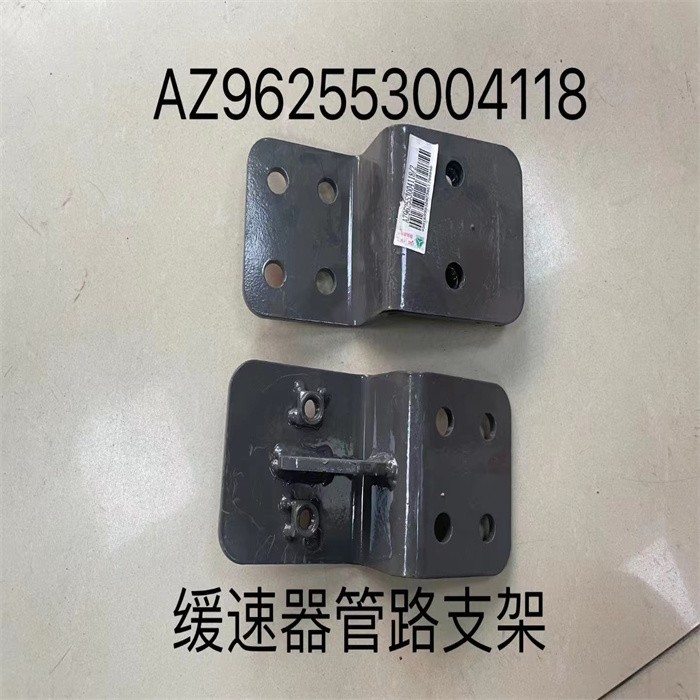
A Retarder Pipe Bracket is an engineering component used to secure and support piping within a system, specifically in applications where there is a need to slow down or control the flow of fluid within the pipes. This type of bracket is typically found in systems such as retarder units used in the automotive industry, HVAC systems, or process piping where precise control over fluid dynamics is necessary.

A straight thrust rod, also known as a hydraulic cylinder rod, is a solid, round bar that transmits force or pressure from one end of a hydraulic cylinder to the other. It is a critical component in hydraulic systems, converting the linear motion of the piston within the cylinder into a usable force or movement at the rod's opposite end.

A dust jacket is a protective cover, usually made of paper, sometimes cloth, placed around the hardcovers of books as a way of protecting the book covers from damage. The dust jacket is typically a paper wrapper fitted over the binding and is an important part of a book's original packaging.

An intercooler hose is a rubber or silicone tube used in internal combustion engines to connect the outlet of the turbocharger compressor to the inlet of the intercooler. Its primary function is to transport the compressed air, which is hot and under pressure, from the turbocharger to the intercooler where it is cooled down before being sent to the engine's intake manifold.

Torque rubber core, also known as torque arm, is a flexible coupling or joint used in the drive train of an automobile. It connects the transmission to the differential, allowing for slight angular adjustments due to manufacturing tolerances, suspension movement, and torque variations.

An expansion tank, also known as an overflow tank or header tank, is a vital component in many fluid systems, including heating and cooling systems. Its primary purpose is to accommodate the thermal expansion of fluids as they heat up and to provide a reservoir for any excess fluid that may result from overpressure or leaks.

A bellows hose, also known as a convoluted hose or a corrugated hose, is a type of flexible hose that is characterized by its accordion-like structure. This design consists of a series of pleated metal or rubber tubes that expand and contract as needed, providing excellent flexibility and the ability to absorb vibration and shock.

HOWO is one of the main products of China National Heavy Duty Truck Group, and its models have diversified colors. You can contact us to provide your needs, we will provide you with better service.
A shock absorber, also known as a damper, is a mechanical or hydraulic device designed to absorb and dampen kinetic energy. Its primary function is to smooth out the ride by controlling the motion of the suspension or chassis of a vehicle.
Features of Shock Absorber
Energy Dissipation
Shock absorbers convert kinetic energy into thermal energy, which is then dissipated into the atmosphere, reducing the impact on the vehicle's structure and occupants.
Stability Control
By limiting the bounce of the vehicle's wheels and body after hitting a bump or during sharp maneuvers, shock absorbers help maintain vehicle stability and traction with the road.
Tire Contact
Shock absorbers ensure that the tires remain in constant contact with the road surface, which is essential for good braking performance and handling.
Durability
Designed to withstand harsh conditions and repeated use, shock absorbers are built to last, often featuring protective boots to prevent dirt and debris from entering the assembly.
Types of Shock Absorber
Twin-Tube Shocks
Twin-tube shocks, are, for the most part, the definition of a standard shock. Nearly all of the text above defines how this shock works, so we won't get into much more detail. What we will say is that a twin-tube shock is the "entry level" shock absorber if you were to compare all shock absorbers against each other. These are considerably cheaper to manufacture, but offer the least consistent dampening in comparison. Twin-tube shocks are much more susceptible to fade, aeration and heat dissipation.
Coil-Over Shocks
Coil-over shocks are fairly simple by design. Simply put, a coil spring is placed over and around the shock body, adding an additional spring rate to the shock absorber. These coils can be placed over just about any type of shock absorber depending upon the manufacturer. Unless you have a specific need for these shocks, or if you plan on using this design in lieu of leaf or coil spring suspension altogether, don't bother.
Gas / Pressurized Shock Absorbers
First, let's dispel an old wives tale that gas shocks are much more stiff than regular shocks, offering a harsher ride. Gas shocks can be valved differently to offer a ride just as smooth as a twin tube shock, while still providing far superior shock-damping consistency than any regular shock on the market.
Mono-Tube (Single Wall) Shock Absorbers
These shock absorbers types use a single-wall shock tube to enclose the piston, the shock oil and (sometimes) the pressurized gas. These shock absorber types are much more precise at dampening than the standard shock absorber because they are made with considerably more precise standards during the manufacturing process. Additionally, in most cases, the single-wall shock absorber is considerably stronger than the twin-tube shock absorber because they typically use a larger diameter piston. Further, the single-wall absorber is more resilient to shock fade because it can divide the shock's oil from the air space far better than a twin-tube shock. With this type of construction comes the benefit of better heat dissipation as well.
Shocks With Reservoirs
Contrary to popular belief, the external reservoir on a shock of this type isn't made to hold extra shock oil. Its purpose is to house the extra needed air space during a shocks compression cycle. Typically this is not air at all, but nitrogen. It will hold some additional fluid as needed, but this shock is designed differently from most other shocks in that the entire main shock body is completely drowned in shock oil. All shock absorbers, regardless of the type, need some amount of dead air space to allow them to work properly. Standard shocks have dead air at the top of the valve body or utilize a twin-tube model for the needed expansion.
Bypass Shocks
The dampening provided by standard shock absorbers is provided by the valving system being located at the head of the shock piston, which determines the dampening rates. Bypass shock absorbers aren't all that different in that aspect, but they do add to this standard method of dampening via valving.
- The spring is the first part of the shock absorber. It compresses when the car hits something and then expands back to its original size. This movement produces an oscillation force that oscillates between two points.
- The piston converts this oscillating force into rotational motion, which is transmitted to the steering wheel via a steering arm.
- The damper is placed at the end of the piston so that it will absorb energy from any additional movement and prevent it from reaching the steering wheel or chassis.
- The valve creates negative pressure inside the reservoir chamber and pushes oil out through check valves into the cylinder chamber, where it acts as a hydraulic damper on piston movement. This creates a more consistent ride quality for passengers in the vehicle.
Finally, springs return dampers back to their original position after each compression cycle has ended so that they can be used again on another vehicle ride down a bumpy road or driveway
How to Choose Shock Absorber
Know Your Vehicle
The first step in choosing the right shock absorbers for your vehicle is to know your vehicle's make and model. Shock absorbers are designed to fit specific vehicles, so it's essential to get the right fit. Make sure you know the year, make, and model of your vehicle before you start shopping for shock absorbers.
Determine Your Driving Needs
Another critical factor in choosing the right shock absorbers is your driving needs. If you use your vehicle for off-roading or heavy-duty towing, you'll need shock absorbers that can handle the extra strain. If you mostly use your vehicle for commuting, a standard shock absorber should suffice.
Consider the Type of Shock Absorber
There are several types of shock absorbers available, including twin-tube, monotube, and coilover. Twin-tube shock absorbers are the most common type and are suitable for most vehicles. Monotube shock absorbers are more advanced and are better suited for heavy-duty applications. Coilover shock absorbers are adjustable and can be customized to your driving needs.
Look For Quality
When choosing shock absorbers, quality matters. You want to make sure you're getting a product that will last and provide the performance you need. Look for shock absorbers made by reputable manufacturers and check online reviews to see what other customers have to say about the product.
Consider the Price
Shock absorbers can vary in price, and it's essential to consider your budget when shopping for them. While you don't want to skimp on quality, you also don't want to overspend on features you don't need. Look for shock absorbers that fit within your budget and provide the level of performance you need.
Check For Compatibility
When choosing shock absorbers, it's crucial to check for compatibility with your vehicle's suspension system. Some shock absorbers may require additional modifications or upgrades to your suspension system, which can add to the cost. Make sure the shock absorbers you choose are compatible with your vehicle's suspension system before making a purchase.
Seek Professional Advice
If you're not sure which shock absorbers are right for your vehicle, seek professional advice. A mechanic or suspension specialist can help you choose the right shock absorbers for your driving needs and budget. They can also install the shock absorbers for you, ensuring they are properly installed and aligned.
Symptoms Of A Bad Shock Absorber
Longer Stopping Distances
If it's starting to take longer to brake, you may have a suspension problem. You may notice the change over time or suddenly, depending on what issue you are dealing with. With that said, this symptom alone doesn't point to bad shocks. It can be part of many failing parts, including defective brake symptoms. Shocks are meant to keep the tires planted on the ground. If they aren't working, the tires may not stay on the ground, creating a bounce. When the tires are bouncing, it becomes much harder to stop when the brake pedal is pressed. If you don't start braking soon enough, you could end up in an accident.
Uneven Tire Tread
If there's anything wrong with the suspension, the tires could start wearing funny. Again, uneven tire wear isn't just caused by bad shocks, so you need to dig deeper into what's going on. The bouncing caused by the bad shocks can cause the tread to wear in an uneven pattern, leaving you to worry about tire replacement if you don't resolve the issue quickly. It can also cause hydroplaning, which is a serious accident threat.
Nose Dives/Squatting
If the shocks are defective, the piston can move too much inside the cylinder. When you step on the brakes, the front of the car will start to dive. This happens because the car's weight swings further than it should of when controlled by the shocks. Additionally, the rear of the vehicle can squat for many of the same reasons. When you hit the accelerator pedal, you may notice the squatting because of the weak shocks.
Excessive Vibration
It's normal to feel some vibration when you travel over uneven surfaces, even when everything is operating as it should. It's when the vibrations can always be felt that you have a problem. Faulty shocks are going to allow more vibration during your drive. You will feel the shaking in your steering wheel, even if you are driving across even and calm roads.
Leaking Fluid
If a shock absorber breaks, you could see fluid leaking out. Normally, the fluid comes from around the seals that are part of the construction. You may see oil dripping down the sides or a small patch on the ground. This oil doesn't leak to the same extent as what's in the engine. Still, without this oil inside the cylinder, the shocks are ineffective.
Strange Noises
With good shocks in place, there should be no strange noises when you hit a bump. The shocks are meant to dampen the up and down movements, so you don't feel them or hear them. However, if the shocks or bushings start to wear out, you may hear more sounds because of the excessive vibrations we talked about earlier. It's common to hear rattling sounds when the shocks are bad. You can also hear some squeaking, depending on what's failed and how bad it is.
Frequently Asked Questions
Q: What is a shock absorber?
Q: How do shock absorbers work?
Q: Are shock absorbers and struts the same thing?
Q: How often should shock absorbers be replaced?
Q: What are the symptoms of worn shock absorbers?
Q: Can I replace shock absorbers myself?
Q: What factors affect shock absorber performance?
Q: Are there different types of shock absorbers?
Q: What is the difference between twin-tube and mono-tube shock absorbers?
Q: What are the benefits of adjustable shock absorbers?
Q: How do I choose the right shock absorbers for my vehicle?
Q: What is the role of shock absorbers in vehicle safety?
Q: Can shock absorbers be repaired?
Q: Do all vehicles have shock absorbers?
Q: Can shock absorbers affect tire wear?
Q: What is the difference between OEM and aftermarket shock absorbers?
Q: Can shock absorbers affect vehicle handling?
Q: Can shock absorbers affect fuel efficiency?
Hot Tags: shock absorber, Chinashock absorber manufacturers, suppliers, factory, Fan Belt 6PK, Fan Belt 12PK, Rubber Support, Weichai WD615 Engine Assembly, WD618 Engine Pistons, Toothed Belt AV10 1175

