


Air Filter
An air filter is a component used in internal combustion engines and HVAC systems to remove contaminants from the air entering the system. In the context of an engine, the main purpose of an air filter is to prevent dust, dirt, and other debris from getting into the engine's cylinders, where it could cause abrasion and wear on the moving parts, leading to reduced performance and potentially severe damage.
Jinan Aidela International Trade Co., Ltd. : Your Trustworthy Air Filter Manufacturer!
We are engaged in heavy-duty truck parts, and we have professional business and technical personnel to provide you with services and provide you with a one-stop solution to your domestic procurement chain.
Rich Product Variety
Our company can produce radiator cores, piston rings, oil cooler components, heavy truck cabs, engines, gearboxes, chassis, frames, oil circuits, etc.
Wide Range of Product Uses
Our products can be widely used in transportation, agricultural machinery and other fields, and have good quality assurance.
Leading Service
We have many years of industry experience and a complete production management, quality supervision and sales service operation system. Whether you want to buy an engine or a frame, just send your needs by email and we can customize the product for you.
Guaranteed Quality
Our products have obtained CE, ISO900 certificates, and we have our own factory and production equipment, and the process and precision meet the high standard quality of the products.

Walking Platform Bracket Assembly
The Walking Platform Bracket Assembly refers to a set of components designed to secure and connect the walking platform, also known as a catwalk or work platform, to its supporting structure. This assembly typically includes brackets, which are metal frames that bolt onto the main support beams or columns. These brackets provide a stable attachment point for the platform, ensuring it can safely support workers and equipment during maintenance, inspection, or construction activities at elevated heights.

A bellows hose, also known as a convoluted hose or a corrugated hose, is a type of flexible hose that is characterized by its accordion-like structure. This design consists of a series of pleated metal or rubber tubes that expand and contract as needed, providing excellent flexibility and the ability to absorb vibration and shock.

An expansion tank, also known as an overflow tank or header tank, is a vital component in many fluid systems, including heating and cooling systems. Its primary purpose is to accommodate the thermal expansion of fluids as they heat up and to provide a reservoir for any excess fluid that may result from overpressure or leaks.

A seat shock absorber, also known as a seat damper, is a mechanism integrated into the seats of vehicles to enhance comfort for passengers by absorbing and minimizing the vibrations and shocks transmitted from the vehicle's movement. These absorbers are typically hydraulic or pneumatic devices that respond to the vertical motions of the seat, providing a smoother ride by dampening the effects of road imperfections, bumps, and potholes.

An intercooler hose is a rubber or silicone tube used in internal combustion engines to connect the outlet of the turbocharger compressor to the inlet of the intercooler. Its primary function is to transport the compressed air, which is hot and under pressure, from the turbocharger to the intercooler where it is cooled down before being sent to the engine's intake manifold.

A shock absorber, often referred to as a shock or damper, is a mechanical or hydraulic device designed to absorb and dampen the energy from shock, which is transmitted through a spring-mass system in response to sudden impulses, such as those from a bump or a dip in the road, or from the motion of a piston in an engine.

A Right Guide Bracket in engineering is a component typically used in mechanical systems, such as linear guiding systems, to maintain the proper alignment of moving elements along a predefined path. It is part of a system that ensures precision and smooth movement of machinery or equipment by restricting side-to-side motion while allowing for controlled motion along the intended axis.

A hydraulic lock is a mechanism or device used to secure or immobilize a component within a hydraulic system, preventing it from moving or changing position. This locking action can be achieved through various methods, depending on the application and the requirements of the system.
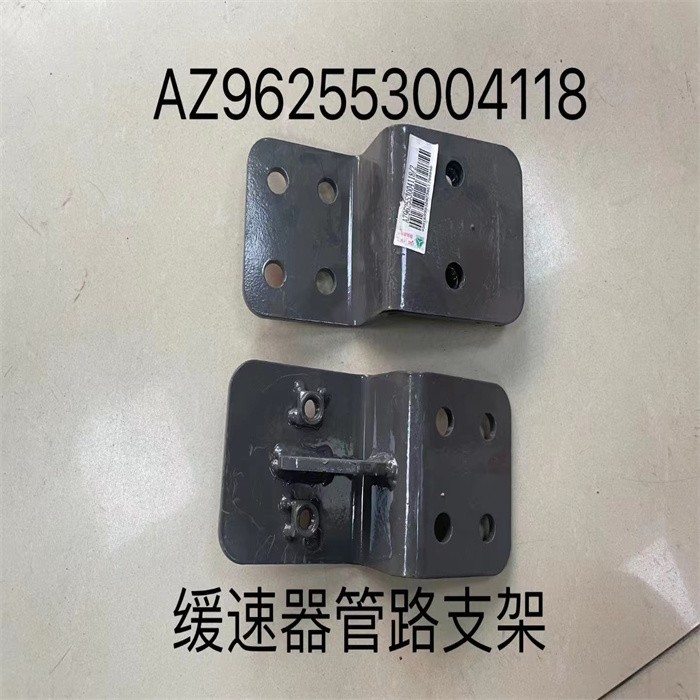
A Retarder Pipe Bracket is an engineering component used to secure and support piping within a system, specifically in applications where there is a need to slow down or control the flow of fluid within the pipes. This type of bracket is typically found in systems such as retarder units used in the automotive industry, HVAC systems, or process piping where precise control over fluid dynamics is necessary.
An air filter is a component used in internal combustion engines and HVAC systems to remove contaminants from the air entering the system. In the context of an engine, the main purpose of an air filter is to prevent dust, dirt, and other debris from getting into the engine's cylinders, where it could cause abrasion and wear on the moving parts, leading to reduced performance and potentially severe damage.
Features of Air Filter
Increased Fuel Efficiency
One of the biggest reasons to change your air filter regularly. Some studies indicate that replacing a dirty air filter increases fuel mileage on older, carburated cars by as much as 14 percent if the filter is so dirty it affects driveability. In addition, changing a clogged air filter can potentially increase acceleration by 6 to 11 percent on modern fuel-injected cars. Other studies claim a 10 percent increase in gas mileage and up to 15¢ per gallon fuel savings. Regardless of the exact figures, it is obvious that a clean air filter improves air flow to the engine and increases engine performance and gas mileage.
Reduced Emissions
Clogged air filters can reduce air flow to the engine, literally choking it, and as a result affect the emission control systems of the car causing an incorrect air-fuel mixture and spark plug ignition problems which can lead to serious driveability issues. Spark plugs can become fouled which often times result in an engine miss or rough idle, while also greatly affecting fuel mileage.
Prolongs Engine Life
Changing the air filter regularly helps prolong engine life because the air filter is designed to trap damaging dirt and debris that can damage internal engine parts such as the cylinders and pistons. Engine damage can occur from particles as small as a grain of salt and result in costly repairs.
Easy to Track
Air filters should be changed every 12,000 to 15,000 miles or so, more often in dusty driving conditions. The owner's manual maintenance schedule will indicate how often the air filter should be replaced. A dirty air filter might appear clean but should still be replaced at the recommended intervals.

Engine Air Filter
Also known as the external air filter or the air cleaner, the engine air filter's main job is to remove dirt, dust, and other particles from the air entering the engine. This helps to protect the engine from wear and potential damage caused by foreign particles. The engine air filter is typically made of a pleated paper or synthetic material encased in a plastic or metal frame. It is usually located in the air cleaner box, which is mounted on the engine compartment's side or top.
Cabin Air Filter
Also called the interior air filter or the pollen filter, the cabin air filter cleans the air that enters the vehicle's passenger compartment. Its purpose is to improve the air quality inside the car by trapping dust, pollen, bacteria, and other particles, as well as reducing unpleasant odors. The cabin air filter is usually located behind the glovebox or under the dashboard, although the exact location can vary by make and model of the vehicle.
Surefire Signs For Air Filter Replacement
The Engine Misfires
When the car's engine misfires, it indicates that the air filter needs replacement. The engine misfires when the filter becomes dirty and clogged, thereby restricting the engine's airflow. This further causes the car's engine to run lean. So, when the engine doesn't get enough fuel to burn, it causes the engine to misfire. In such a situation, get your filters replaced.
Fuel Economy of Your Ride Is Poor
When the ride's economy lowers, it may be time to replace the air filters. Clogged filters stop clean air from reaching the engine, so the engine has to work harder, thereby using more fuel than usual.
Car's Running is Rough
Another surefire sign of a clogged filter is that it doesn't run smoothly. So, when the filter has debris or is clogged, it restricts the airflow and lowers the vehicle's performance.
You Haven't Replaced It In the Longest Time
In general, a passenger car's air filter should be replaced every 20.000 to 30.000 milesSimilarly, you can replace air filters on commercial vehicles (light and heavy-duty) as soon as possible after 30,000 miles. However, if you drive your vehicle in a dirty or dusty environment, you may have to replace air filters more often. So, if you haven't replaced your car's air filters for the longest time, then get them changed before they impact your ride's performance.
How to Choose Air Filter
Filter's Size & Style
There are Different Types Of Engine Air Filters available in various styles and sizes. These characteristics are key factors to ensure optimal filtration. An ill-fitting filter can create spaces where unfiltered air can bypass the filter and enter the engine. Be sure to check and compare the size and fit against the previous filter to make sure you have the right size and type of filter for your engine's housing.
Filtration Efficiency
Choose an air filter with a high filtration efficiency. Efficiency is the percentage of contaminants an air filter removes. This quality is pivotal in safeguarding your vehicle's engine.
OEM Recommendations
Consult your car's original equipment manufacturer (OEM) specifications. These provide valuable guidance on which air filter your vehicle's engine was designed to run with. It is recommended that you choose a filter that meets or exceeds your vehicle's OEM standards.
Ease of Installation
If you take pride in doing your own car maintenance, consider filters that are designed for easy installation. FRAM offers a range of engine air filters for a hassle-free installation.
Driving Conditions
If you often drive on dusty roads, your filter will need to hold more dust. A premium filter will do a good job of capturing tiny pollutants that might bypass a standard filter. However, if you often drive in heavy traffic areas, the needs of your filter will be different. The more cars around, the more fumes there will be.
Recognizing When To Change Air Filters
Mileage Indicators
Most manufacturers recommend replacing the air filter every 12,000 to 15,000 miles. However, if you often find yourself driving in dusty conditions or in heavy traffic, consider changing the filter more frequently to ensure your engine is protected.
Visual Inspection
A simple visual check can provide a lot of insight. A clean air filter usually appears white or off-white. If it looks darkened or visibly soiled, it's time for a replacement.
Performance Symptoms
Usually, if your car starts acting up, checking the air filter is one of the first steps. You might need to learn how to change car air filters if this has happened to you.Be alert to changes in your vehicle's performance, which can signal the need for a new air filter. Symptoms might include reduced fuel efficiency, unusual engine noises, or difficulty starting.
How to Replace the Air Filter
Find the Air Filter Housing
Identify the air filtration unit, generally a black plastic box located near the engine. Consult your owner's manual if the location isn't immediately obvious.
Remove the Housing Cover
Open the housing by releasing metal clips or unscrewing. Handle these components gently to avoid damage or loss.Tip: Keep all removed screws or parts in a safe place-you'll need them to secure the cover once you're done.
Note the Airflow Direction
Before removing the old filter, observe the direction of airflow indicated by arrows on the filter. Correct airflow direction is crucial for effective operation.
Gently Remove the Old Filter
Carefully lift out the old filter, ensuring that no debris falls into the air duct.Trick: Use a small brush or hand vacuum to clean the inside of the housing before inserting the new filter. This helps keep the engine free of dirt.
Dispose of the Old Filter Properly
Responsible disposal is part of maintaining both your car and the environment. Ensure the old filter is discarded according to local regulations.
Frequently Asked Questions
Q: What is the primary purpose of a car air filter?
Q: How does a car air filter work?
Q: What types of contaminants can a car air filter remove?
Q: How often should a car air filter be replaced?
Q: What are the signs that a car air filter needs to be replaced?
Q: Can a dirty car air filter cause damage to the engine?
Q: Is it safe to clean a car air filter instead of replacing it?
Q: How does the type of car air filter affect its performance?
Q: Can a car air filter improve fuel efficiency?
Q: Are there any special considerations when choosing a car air filter for a specific make and model of vehicle?
Q: Can a car air filter help to reduce emissions from the vehicle?
Q: Is it difficult to replace a car air filter?
Q: Can a car air filter become clogged with water?
Q: Do all cars have the same type of air filter?
Q: Can using a low-quality air filter harm my vehicle?
Q: Can a car air filter increase horsepower?
Q: Can a car air filter improve the smell of the car's interior?
Q: Can a dirty car air filter affect the vehicle's HVAC system?
Hot Tags: air filter, Chinaair filter manufacturers, suppliers, factory, Air Compressor Cylinder Valve Plate, Wd615 Engine Crankshaft, Truck Rubber Parts, 71 Degree Thermostat, Fan Belt 12PK, Wheel Ring Gear

